Laboratory Instruction
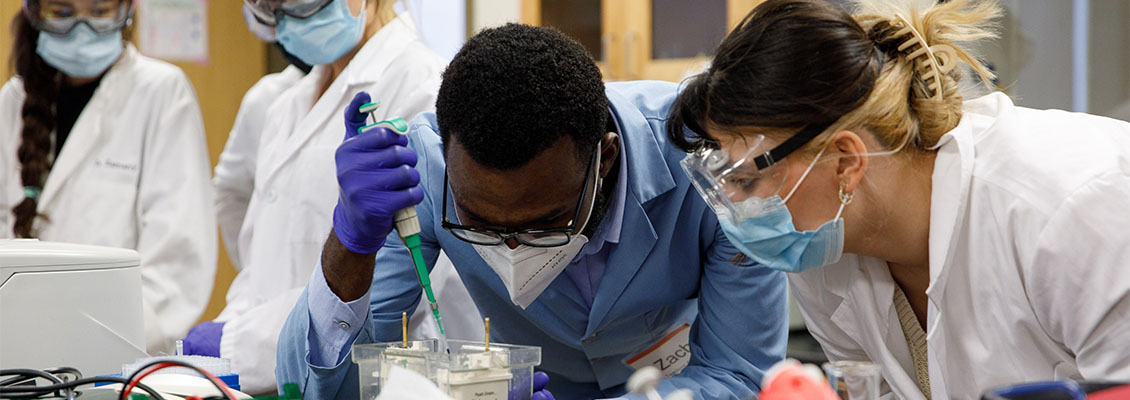
Laboratory courses offered by the Biology and Biochemistry Department cover a wide range of disciplines and methodologies including cell and molecular biology, biochemistry, genetics, microbiology, population biology, and human anatomy and physiology. The Office of Laboratory Instruction functions to coordinate activities and supervise teaching of the laboratory classes. Lab instruction personnel strive to maintain high academic standards by revising curriculum, upgrading laboratory equipment periodically, and by implementation of new teaching strategies to include the most recently developed technologies. Core personnel consist of four coordinators who oversee specific divisions of laboratory courses. For assistance with a laboratory course, please contact the coordinator over that division. The Office of Laboratory Instruction is located in the Science Building, Room 124 Office: Room 124F Science Introductory Biology Office: Room 124A Science Human Anatomy and Physiology Office: Room 124D Science Genetics and Microbiology Office: Room 124C Science Biochemistry and Cell Biology Office: Room 124B Science Laboratory courses supervised by individual department faculty Plant Physiology Laboratory (BIOL 3445), Dr. Alfred Loeblich, Loeblich@swbell.net (see listings in the Undergraduate Catalog for credit hours, class hours and prerequisites) What are the prerequisites and other enrollment requirements for the laboratory courses? How do I register for a laboratory course? How do I get into a fully enrolled class? Where is the Office of Laboratory Instruction located?Introduction
Coordinators and Divisions
Program Director: Larry Rapp, Ph.D
Email: Lrapp@uh.edu
Phone: (713) 743-8398
Coordinator: Ana I. Medrano, Ph.D
Email: aimedrano@uh.edu
Phone: (713) 743-0953
Courses: BIOL 1161, BIOL 1162
Coordinator: Tejendra Gill, Ph.D
Email: tgill@uh.edu
Phone: (713) 743-2646
Courses: BIOL 1134, BIOL 1144, BIOL 3124
Coordinator: Nusrat Malik, Ph.D
Email: nmalik3@uh.edu
Phone: (713) 743-2641
Courses: BIOL 1153, BIOL 2133, BIOL 3201
Coordinator: Donna L. Pattison, Ph.D.
Email: dpattiso@central.uh.edu
Phone: (713) 743-2642
Courses: BCHS 3201, BCHS 4311, BIOL 4272
Population Biology Laboratory (BIOL 4206), Dr. Lawrence Williams, lrwilliams@uh.eduCourse Descriptions
First semester of a two-part series on the fundamentals of the structure and functions of the human body. Topics include cell structure and membrane transport; anatomy (gross and micro) and physiology of body tissues and organs including skin, bone, heart, muscle, nervous, and sensory.
Second semester of a two-part series on the fundamentals of structure and functions of the human body. Focuses on the physiology of organ systems including the endocrine, cardiovascular, respiratory, digestive system, excretory, and reproductive systems.
Designed for science majors and pre-professional students. A survey of topics in biological science including scientific method, observation and measurements techniques, biochemistry, cell biology, and physiology.
Designed for science majors and pre-professional students. A survey of topics in biological science including genetics, molecular biology, biotechnology, ecology, and evolution.
Fundamental principles of microbiology including the survey of pathogenic microorganisms and the diseases they cause.
Covers staining techniques and physiological tests used in the identification and characterization of bacteria as well as water and soil testing procedures.
Physiological mechanisms of neural, muscle, cardiac, respiratory, renal, and endocrine functions in the body. Students use computerized equipment in conjunction with physiological recording devices to perform experiments on anesthetized animals and human subjects.
Experimental aspects of basic Mendelian, molecular, and microbial genetics. Course work includes a semester-long independent study project to map a D melanogaster gene.
Laboratory sessions on respiration, photosynthesis, nutrition, transport, and development of flowering plants.
Field and laboratory exercises illustrating concepts in evolution, ecology, and animal behavior.
Fundamental concepts and laboratory techniques in modern cell and developmental biology. Students apply techniques including light microscopy, gel electrophoresis, and spectrophotometric assay to study control of gene expression and other cellular and molecular processes in viruses, bacteria, protozoans, and cultured vertebrate cells.
Experimental studies of basic principles and methods of biochemistry. Students are introduced to various biochemical techniques including spectrophotometry, chromatography (thin layer, ion exchange, gel filtration), protein gel electrophoresis, enzyme analysis, and DNA isolation and characterization.
Experimental study of contemporary techniques in biochemistry and molecular biology. The techniques introduced include DNA isolation and electrophoresis, plasmid isolation and characterization, expression of cloned genes in prokaryotic and eukaryotic cells, and the polymerase chain reaction.Lab Instruction FAQ's
Some biology laboratories require that you have either previous credit for or be concurrently enrolled in the corresponding lecture (e.g., BIOL 3201 and 3301, respectively). For other laboratories (BIOL 1431, 3407, and 3445) you must be concurrently enrolled in the lecture. If you are not enrolled in lab and lecture as a unit, you are not enrolled at all. For a complete list of the prerequisites and co-requisites for each laboratory course please see the biology and biochemistry course listings in the UH Undergraduate Catalog.
You may register online at Enrollment Services Online in the UH website.
If the section you want is full, go to Old Science Building, Room 120 and fill out a "Closed Section Request."
We are located in Suite 124 of the Science Building.
